

An initiative by the Royal Horticultural Society inspires SUSAN OLIVER to start thinking how the idea of competition is doing more harm than we think
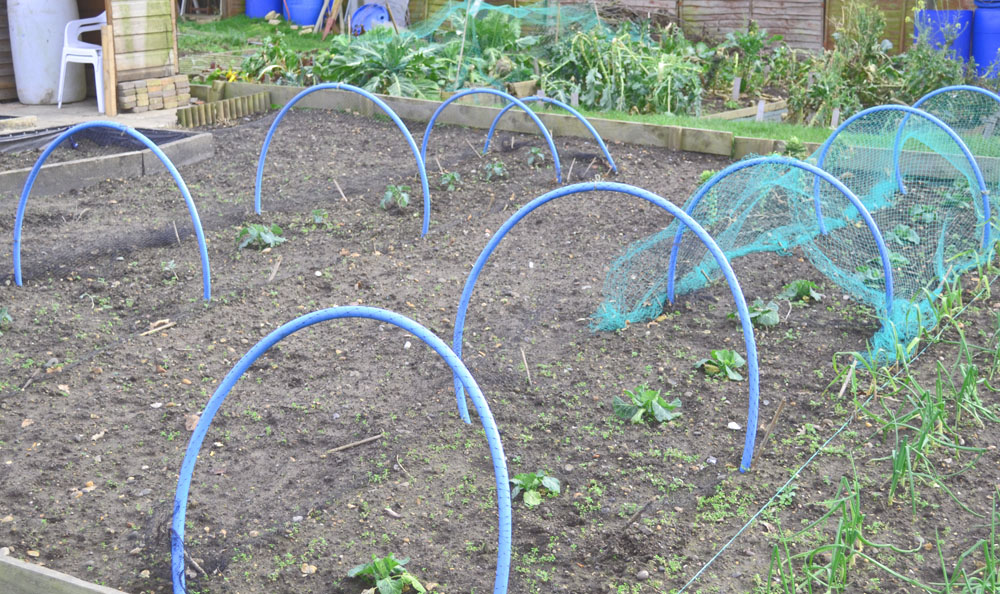
Competitive gardening: are those Olympic rings being used on the allotment?
There is a lot of competitions on television these days. Contests involving baking, cooking, singing, dancing. And we’ve just had the Olympics, the ultimate sporting competition.
Recently, the cult of competition has reared its head in the most unlikely of activities: children’s gardening. I am a member of the Royal Horticultural Society and am delighted to receive their monthly magazine, The Garden. In the most recent issue, September 2012, they boast about setting up an RHS Young School Gardener of the Year competition.
I feel like banging my head against the greenhouse.
Who seriously thinks of gardening as a competitive activity? Of course, you’ve got the people who grow 12-foot long carrots and 12-ounce gooseberries. You’ve got the garden designers who enter Chelsea. But, on the whole, people see gardening as the ultimate inclusive activity, something anyone can, and should, do. Why does the RHS think that a competition will encourage participation among children?
There’s a commonly held idea that says competition increases participation. Right after the Olympics, Sebastian Coe justified its cost by saying, “You can never spend too much on elite sport. It will always be the greatest driver of sporting participation and we should be unashamed about that.”
Competitions probably produce a short spurt of interest by people emulating sports heroes but I think it’s a myth that they encourage long-term participation. Look at football: here’s an elite sport into which huge sums of money are poured year after year and many stars are created – yet how many of the ordinary public actually play it?
Let’s be honest: people participate in something for a number of different reasons. It could be because it’s a social event or it’s just plain fun. The average person doesn’t participate in something to compete; it’s more about enjoyment, trying to be healthy, doing something new.
Participation is also about peer pressure. If enough people are wearing black, everyone else will feel the pressure to do so, too. So, for example, if we really want to create a sports revolution in this country, more ordinary people need to participate in sport on a regular basis. How do we do this? Create lots of amateur sport programmes where folks of all ages can participate. Kids naturally copy what the adults are doing so it would be the best way of encouraging kids to do sport.
I don’t disagree with Coe’s ultimate objective, which is to identify and support Britain’s best athletes, but if you want to identify any kind of talent, your chances improve from selecting from a large pool of participants. If relatively few are participating, you are missing out on a lot of talent that is lying dormant and unrecognised. Therefore, Coe should be doing a lot more to encourage sports participation to the whole of Great Britain rather than just bolstering the “elite”.

The editor of The Garden had better prepare for a letter from Addiscombe
Another thing Lord Coe should note is that two of the nations at the top of the medals table at the London Olympics were the United States and Britain, countries which have major issues with obesity. Early this year I was shocked to hear that 1 in 3 people in the US are obese and in the UK, it’s 1 in 4. It made me drop my crisps.
Doesn’t this prove that the example of “elite athletes” don’t do the trick for inspiring the population? The US has been doing well at the Olympics for many years and it has obviously not helped to encourage one-third of a major nation to take up sport.
There is no “trickle down” effect, as Ronald Reagan would put it. Why? Because I think that a lot of people are actually put off by competitions. By creating a culture where there’s just a few sexy stars, regular folk give up by thinking that what they do isn’t important.
We have become more engrossed with the idea of winning and when this happens, participation goes out the window. We forget about the activity, about commonality and helping one another; we just want to know who’s best. Notice how even winning a silver medal has become bad news? Heaven forbid if you’re fourth in the world.
Of course there’s a place for competition. Of course we should acknowledge those who excel. I’m not arguing that we should ignore differences of accomplishment and ability. But there’s got to be reasonableness and balance. Leisure activities should be used more for bringing communities together and strengthening our culture rather than the means to create fame for a few. Sports, the arts, baking, cooking, gardening – these activities are for us all, not just the best.
A culture develops around activities that people love to do. A culture is about valuing and cultivating value and here in Croydon, we know what can happen when there isn’t enough value in a society. I can’t imagine that any of those Olympic athletes train for four years simply to win a medal. I think they do it because they love the training, the discipline and the daily commitment to their sport. These values far out-weigh the concept of winning.
Coming back to the children’s gardening competition, I felt so disgusted with the idea that I wrote my first letter to the editor to The Garden. Let’s see if they are brave enough to publish it.
- Susan Oliver is a gardener, bee-keeper and artist who lives in Addiscombe
- Inside Croydon: For comment and analysis about Croydon, from inside Croydon
- Post your comments on this article below. If you have a news story about life in or around Croydon, a residents’ or business association or local event, please email us with full details at inside.croydon@btinternet.com