

Croydon’s Labour party looks like adopting a new approach to offer to the electorate ahead of the 2014 local elections.

The new politics offers something of a break from the borough’s first Labour administration, which ran from 1994 to 2006. The new position has emerged in response to the long-held dominance by a few powerful senior council officers in Croydon’s politics, and also because of the extravagance of the council offices being built for £140 million, when Council Taxpayers’ services are being severely cut.
Labour intends to devolve control over services to council “customers” – residents, businesses and voluntary organisations – and away from the control of officials. It will see council services answerable to users, rather than the council officials controlling residents.
Many of the ideas are inspired by the work done by Croydon North’s MP Steve Reed when he was the leader of Lambeth Council.
At a meeting on Saturday – open to the public at no charge to attend, listen and speak, unlike the £19 fee that the local Tories asked for to attend their equivalent manifesto event recently – Reed launched Labour’s consultation with Croydon residents for 2014.
He talked of how the Blenheim Estate in Lambeth had been transformed from a sink estate to a place that residents loved by making housing officials accountable to residents who have the power to sack management who fail to deliver on things such as value for money housing repairs.
Many of the initiatives in Lambeth were built upon such “co-operative style” work. One of the motivations was to save money and to challenge trade union control over council services. The policies have been controversial locally, and has seen the council evict tenants from long-standing housing co-operatives. Many in Lambeth still criticise these Blairite, centrist projects.
Tony Newman, the Labour leader in Croydon, is entirely open in stating that this new approach is partly driven by a desire to drive down costs. He says that Labour has to be realistic that any new council from 2014 will have to make yet further significant savings, in part because of the local authority settlement already laid out by the Tory Chancellor, Gideon Osborne, and especially because of the extravagances of the new council offices, which Newman says is costing every household in Croydon £1,000.
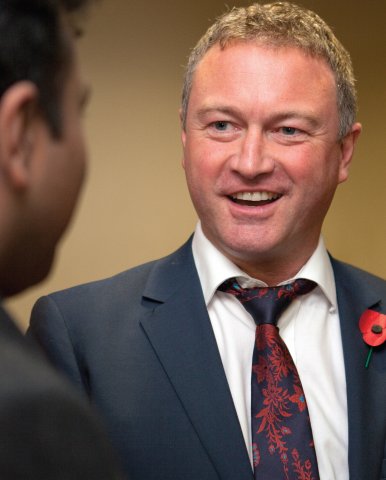
Steve Reed: “Co-op Lambeth” approach brought to Croydon
With the current Conservative-run council keeping all contracts with John Laing over the £450 million URV – Urban Regeneration Vehicle – completely secret for the past five years, Newman and his team, if elected in 2014, will not be able to assess Croydon’s financial liabilities until the day after the election. Newman has promised to “throw open the books” on his first day in office if his group wins a majority at the Town Hall.
In a borough where the previous “Purley King and Queen” have been Dudley and Margaret Mead, there remain serious challenges for Labour in Croydon before they will be doing the Lambeth Walk.
Many local Labour members want the council’s procurement of services from the private sector to be better used to deliver social justice by focusing on gender, race, lesbian, gay, bisexual and transgender equalities. These aims may clash with resident-control driving the priorities.
Some Labour union members have been concerned about the exploitation of council staff who have been forced to re-apply for their jobs and transferred to much lower-waged private sector employers, and they may prefer to bring services back under the direct control of the council – “in house”. This may also cause a policy contradiction.
A desire to ensure all those employed on council work are paid the £8.55 per hour London Living Wage – as successfully introduced at City Hall by former London Mayor Ken Livingstone and continued, surprisingly enthusiastically, by Boris Johnson – rather than the (£6.19 per hour) statutory Minimum Wage is also important to Labour.
They believe that the extra cash paid to the lowest paid boosts the local economy and actually improves the work delivered to Council Tax-payers, as staff absenteeism is reduced and staff retention and productivity goes up. The likely £10million cost will give pause for thought, though.
The devolution of power away from the Town Hall – or, rather, the extravagant £140million new offices on “Cost Us A Mint Walk” – will likely also put a new burden on elected councillors to act as conduits for complaints in managing services through residents. After more than a decade’s delay, this would deliver on what was intended in the Blairite reforms to local government, which sought to move power away from most councillors, leaving the majority of local elected representatives to concentrate on being “ambassadors” in their their wards.
The influence or inspiration of the new MP Reed is clearly an important element in refreshing Croydon Labour’s approach. Pointing to success in Lambeth that could be brought to Croydon may also inspire disillusioned voters to turn out, possibly turning to Labour rather than to UKIP as the outlet for their protest vote against the ConDem government.
- Croydon Labour is consulting on their manifesto ideas through http://www.croydonlabour.org.uk/manifesto
- “Gis a planning job”: damning email from Croydon councillor
- Council announces plans for takeover of Fairfield Halls
- Failing Fairfield Halls is limping along on borrowed time
- Inside Croydon: For comment and analysis about Croydon, from inside Croydon – 267,670 page views (Nov 2012-Apr 2013)
- Post your comments on this article below. If you have a news story about life in or around Croydon, a residents’ or business association or local event, please email us with full details at inside.croydon@btinternet.com