

In his first regular commentary on life in the borough, ANDREW PELLING, the former local councillor, London Assembly member and MP, offers some answers to a fundamental question about 8/8 – why Croydon?

Andrew Pelling (left) with Ken Livingstone and Croydon North MP Malcolm Wicks touring the site of the London Road rioting
Why Croydon?
It is a good question. It flummoxed me for a moment.
One of Murdoch’s two national newspapers was in Croydon the morning after our worst ever night, trying to get juicy comments among the wrecked businesses, homes and lives of London Road.
Even the Corriere della Sera managed to get down to Croydon by the evening after the troubles to pose a similar question. Why had a blameless suburb gone up in flames? The story led the TV news on networks in America and Japan, while the Italian journalist said he was normally the war correspondent in Libya.
So why Croydon in 2011? How did it come to this?
There’s no way that Croydon would have been subject to riot contagion in 1981 or 1985 from the troubles in Brixton.
Thirty years on, though, Croydon is a very different place and Croydon’s “great and the good” need to make a pretty frank and urgent analysis of the possible answers to “Why Croydon?” They might also analyse what can be learned from Brixton’s recovery from those riots three decades ago. Answering those questions could aid Croydon’s bounce back from what is an appalling blow. Judging by a sad performance of local councillors so far this week, you have to feel that they are not ready to take on this very challenging task.
Certainly the Council seems to recognise the seriousness of what happened when they put out notices entitled “Civil unrest in Croydon”. Steve O’Connell, the local Conservative London Assembly member and Kenley councillor, has openly stated that the police got things wrong which suggests that there were very serious errors made indeed.
The Council chief executive was impressive the day after the riots in doing a thorough job on the front line, in sessions with the emergency services and in briefing business and community groups.

An unhappy, and all-too-easy, metaphor for Croydon in 2011?
It would be an understatement to say that investment in the town is going to be somewhat compromised by this dreadful terror which extended far beyond central Croydon. The roll call of lawlessness, murder, violence against the person, arson, robbery, theft and looting also includes New Addington, Duppas Hill, Purley Way, Forestdale, Old Town, Broad Green, Thornton Heath Ponds, Norbury, Thornton Heath, Purley, Coulsdon and Chipstead.
Croydon has been the turf for highly mobile gangs for quite some time so the culture for conflict already existed before the conflagration on 8/8. For years, knife attacks, including killings, were prevalent all along the A23 corridor. And the A23 was again the backbone for the terror on Monday. Police had worked successfully to reduce knife crime with real effort, but then the funding was cut as the Mayor of London froze Council Tax.
The police service nationally finds it very hard to deliver many police officers out on the street. Often there are pitifully low numbers of officers out in Croydon town centre on many evenings. So Croydon, with its good transport links, is vulnerable. These were not necessarily just people from outside the borough, though, who had come to raid our town. One supermarket manager told me that he recognised some of the looters as his customers during daylight hours.
Croydon’s vulnerability comes also from the town’s decline and dreadfully parlous national funding for the borough that stems from misconceived perceptions of the place by national politicians and the vagaries of national and London politics that act directly against the town’s interests and prosperity. Thus Croydon these days has a rundown downtown that made it much more likely to be a place for Monday night’s conflict.
Croydon’s interests stymied by Westminster, Kensington and Wandsworth
Neighbourhood policing teams for each ward in London, which were rolled out by Ken Livingstone when Mayor of London and Labour ministers helped boost policing to match the increased social challenges that came with decline, even if small Conservative boroughs in London with wards half the size of Croydon did far better out of the scheme than we did. Outer London Croydon’s interests were stymied not by Labour but by their powerful Conservative friends in inner London, at Westminster, Kensington & Chelsea and Wandsworth.
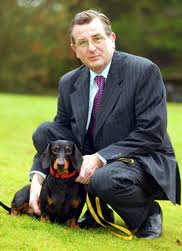
Peter Bowness: he did not let Croydon go to the dogs when he was on the council
It’s a peculiarity that since Peter Bowness, the very successful and long-serving former Conservative leader of Croydon Council left London politics, it’s these three big Tory authorities, latterly joined by tax-cutting Tory Hammersmith & Fulham, that dominate the dialogue in London politics, especially with a Conservative Mayor.
It was these powerful Conservative authorities that neutered the change of the formula that would have boosted Croydon’s policing numbers. It was bad enough that Conservative Wandsworth’s aggressive housing policies had socially engineered many problem families out of their area into other south London boroughs, including Croydon, without this particular act against Croydon’s interests.
It’s this weakness of Croydon Conservatives to have real pulling power in London that explains why their urgent pleas for extra policing were ignored as the crisis loomed on the afternoon of 8/8. Extra help was granted only when the town was already ablaze.
To be fair, when he was Mayor, Livingstone had made it clear that he understood Croydon’s decline as part of a general demographic gentrification of inner London and a loss of dynamism in many outer London borough economies. Livingstone hoped that a cheap fares policy would assist mobility to get to jobs and so boost Croydon prosperity. But when asked what, if anything, his London Development Agency were doing to invest money in south London, their very weak response was that they were putting money into the Elephant & Castle.
Labour’s need to defend inner London seats just did not leave enough money to give real largesse to Croydon, and Labour’s seats in northern urban England were also a priority in the local government financial settlement. Money for the Olympics meant even more money going from south London to east London. Livingstone refuted this version of events when he visited Croydon in March and said that he would be very pro meeting Croydon’s needs next time around, including building the tram extension to Crystal Palace.
Newspapers reported yesterday that Livingstone looked genuinely very moved and distressed by his visit to London Road on Tuesday. National Tory politicians’ failure to go there caused much resentment among traders there.
Boris Johnson has some pennies that can be applied for, from cash released from the winding up of the London Development Agency which the government has unexpectedly allowed him to keep. This, though, is on too small a scale and just a one-off, so that it is really little more than just material for Boris’s campaign leaflets ahead of next May’s London Mayoral election.

The wreckage of Reeves' furniture store, the abiding symbol of Monday's night of destruction
The decline of Croydon into a venue for strife goes further back, though, into the period of Conservative hegemony here. Three of the problems were not of local Tories’ making.
The award of tax advantages to Docklands by a Conservative government (when Michael Heseltine was the post-riots minister) knocked for six Croydon’s previous role as London’s cheaper option for back-office location, which had seen the development of the office blocks in the town centre in the 1960s.
Prime Minister Thatcher’s removal of the business rate from local Council control, which had been used by Conservatives to get jobs in to Croydon by keeping rates very low, was another blow below the belt.
The opening of the M25 drew businesses to locate on the other side of the motorway, away from Croydon’s notorious A 23 traffic congestion, something which was only partially relieved by Livingstone going back on his vow never ever to build a new road project in order to give in to local lobbying and build the Coulsdon Inner Relief Road, a project delayed since 1934.
But worst of all, the Conservatives in Croydon allowed an ever-widening gap in prosperity between the north and south of the borough to grow.
Six months after his departure in 1992 as the last ever Conservative MP in Croydon North West, Humfrey Malins pointedly warned of the dangers for Croydon of the Conservative council’s neglect of the north of the borough and the huge change in relative prosperity there. Once Labour was in control in the Town Hall, it suited them to allow the divide to remain as it permitted them to hold the council majority even though they did not win the most votes across the whole of the borough.
Now with the Tories back in Katharine Street for five years, they seem a very different bunch from the pro-Central Croydon Bownessites. Like many of the constituents they represent from the south of the borough, very many Conservative councillors don’t identify with or come to Croydon except for the hospital or to drive straight into the car park under the Town Hall for council meetings.
As it was, Croydon Council of both political colours managed to pull off the amazing trick of missing the longest ever period of economic boom to build the town anew. Instead, they faffed around with a project for a likely white elephant Arena. The Council went out of its way to stop the owners of land at East Croydon (the blue chip Stanhope) getting on with renewing Croydon with modern offices.
“Conservative politicians look down their noses at Croydon”
Other developers waited upon progress at East Croydon to decide whether to invest. They were just amazed that the Council allowed itself to get drawn into a huge and lengthy public inquiry on the issue. Ultimately, of course, nothing happened – the land remains empty and the town undeveloped. John Lewis may well have been particularly unimpressed – an investment in the centre of Croydon would be a great prize for Croydon, a prize now further out of reach after 8/8. Regional and national politicians felt that if Croydon politicians could not help themselves, why should they help out?
The Conservative council’s “Fair Deal” campaign for more government cash was amateurish and was not convincing when demolished in senior civil servants’ briefings to Labour ministers.
Conservative national politicians were not much better. They rather look down their noses at Croydon, with David Cameron’s contribution upon his campaigning in Croydon for votes for the party leadership limited to going on at length about “the Croydon facelift”.
When I was a Tory MP, an Old Etonian-type in the House of Commons proffered the ill-informed comment that “ it must just be dreadful to have to represent a place like that!” One very senior Tory MP was too frightened even to canvass the people of New Addington, but when delivering leaflets instead came flying back down the path exclaiming in his best rounded tones: “Gosh! There’s a goldfish in the front garden. Never seen anything like it!”
Many ministers mistakenly perceive the mainly prosperous south of the borough as being what Croydon is, and so they cannot convince themselves that Croydon is in fact a place of need. In any case, like Labour, Conservatives have much more important places to protect, in their case, out in the counties and in strong Tory seats. No wonder that public spend this year in Croydon was taken down by 5.04 per cent, while in neighbouring Bromley it is down by only 2.46 per cent and in Surrey 0.31 per cent. This is a dreadful indictment of the poor lobbying skills of the two local Conservative MPs, one of whom is conscientious while the other abstains from involvement in local matters Croydon.
So Croydon is short-changed by both parties and has been allowed to wither on the vine, making it vulnerable to the 8/8 conflagration. That conflagration has left many simmering sentiments.

Monday night's looting in Croydon was at least in part caused by decades of neglect by both political parties
I was distressed to see a white man confront a feisty but well-dressed elderly black man on the 119 bus on the day of the riots, saying, “Why don’t you go back and join the others rioting back there?”, referring to the town centre. I got off the bus with the elderly office worker. His mature view was this was a problem with young people, not black youths. Think of all those violent students, mainly white, up at Millbank, he reminded me.
It was not only Labour and the Conservatives out in New Addington this week; so too was the BNP, ahead of rumoured renewed conflict, although they implied they were staying within the bounds of respectable politics by saying they were going to write to the Sadvertiser, though they feared being edited out by the paper (they needn’t really worry, as that paper’s readership has plummeted alongside the decline of the borough).
But there is tension. The vast majority of London Road traders are enterprising black and minority ethnic business people. Sadly, the police conceded London Road with all its shops and high density housing to the rioters early on in the evening and the devastation wrought there is like a war scene.
On the evening of 8/8, I arrived at West Croydon station at 6.50pm. Eight British Transport Police officers were defending the station. I doubt that they have riot control training. Bravely, they drove a crowd off the small hill at Station Road into London Road. But as we reported at the time, this left the commuters in the war zone between rioters and police. Missiles flew. Station staff stood at the front of the station. The last train out was announced and staff could not find a key to bring down the shutter and provide some protection.
“Traders in London Road felt abandoned, left to their fate by the police”
Was this a conscious tactical move by the police or just an error to concede West Croydon and London Road to the rioters? Police manpower at West Croydon seemed very short as the thin blue line of the British Transport Police stood between the high value Croydon town centre and the rioters.
Traders in London Road feel that the police abandoned them to their fate. The rioters seemed ready for organised pillage. As one trader, who had been smashed in the head, told me, “they came tooled up”, with cutters, sledgehammers and getaway vehicles.
They also feel that other than Ken Livingstone, they have seen no high-profile politicians. Gavin Barwell MP was at Station Road at 7am talking to the radio, as was Jon Rouse, Croydon’s chief executive, and Councillor Simon Hoar at 9am. Malcolm Wicks, Croydon North’s local MP, rushed back from holiday with his family to console and counsel traders.
Labour councillors, including Toni Letts, a very senior local Labour politician, and myself did talk to traders all the way from Sumner Road to Whitgift School. We heard that even in central Croydon, a major retailer had to drive off invaders four times with their own security people. Inside Croydon‘s reporters witnessed the shuttered Whitgift Centre being broken into by a gang of about 30 youths, under the direction of an apparently respectable, suited middle-aged man.
The rampage was least checked by police in London Road and in Old Town, but retailers all the way down to Purley Oaks were hit. Many retailers have good CCTV records of looting, but with custody cells full all the way to Guildford, police are asking them to be patient.
One bullish company in south Croydon was re-stocking after being completely stripped by looters. Burnt out though was the Rock Bottom music store, with discarded musical instruments strewn all up the London Road, an easy metaphor for the state of Croydon for the tabloids.
A well-known motor spares company run by green activist Nitin Mehta, which has been open for 35 years, was gutted like a Second World War bomb site. Surveyors said the whole set of buildings at Sumner Road would have to come down.

Many Croydon buildings attacked by arsonists were in an unsafe state after 8/8
Traders in London Road were crying; residents petrified. Another trader told Livingstone that he had lost everything built up since leaving Palestine many years ago. Residents burnt out of their homes sat on the pavement dazed. There was real bitterness. “Don’t we pay taxes like the shops in the town centre?” was the refrain of a trader a seeking justification for the defence given to the town centre shops and not to his.
It is fair to say that it was a transformation in condition going from London Road up to Poplar Walk, from a blackened war scene to placid shopping district. Kurdish shopkeepers now intended, like the central Croydon retailer, to defend their stores themselves. Six, some dressed in Kurdish national colours, were ready for action, after the previous surrender of London Road by the police. Others were just knocked out by the experience. “That Tamil shopkeeper has just walked away and given up; he doesn’t have the money to start again,” was what one resident commented, the shutter was askew and glass littered the ransacked store.
So respect for the police has gone down further among the victims.
Respect among the rioters, though, seemed non-existent at the very start as they nonchalantly walked down George Street, trying to kick in the occasional window. Pubs hurriedly removed their outside furniture and locked their customers inside.
Why do these young people have so little respect for the police and feel so disengaged from society that they feel no possession of it or stake in it and are happy to trash the lives of perhaps the least advantaged in Croydon’s less privileged places?
Clues to the answer may well have been given at a meeting organised by Rouse on Tuesday as tension rose ahead of a possible second night of trouble. A black female community leader worried about state interference through political correctness in parental inculcation of discipline at home. Another black charity worker very politely referred to the cuts to voluntary work to engage with young people this summer.
A charity dedicated to good fatherhood asked why were the parents taking no responsibility? But the most unpopular analysis was that provided by the youngest person in the room. Disgracefully, he was shouted down, by the politicians no less, for supposedly being too political.
But he said that it was hard for the police to gain respect when London’s most senior policeman has had to stand down, when the media can’t be trusted either because of the News of the World’s corruption, and while the very politicians who are lecturing the young were also corrupt with their expenses. It was a sad but ugly truth. The Conservative politicians present choked on the advice and then spat it out in their haughty disdain. The lad was so disconcerted by the faces of disbelief from those running the meeting that he said he felt he had to leave the meeting to us over the age of 40. So much for constructive dialogue with young people. Another three very gentle looking boys had previously been turned away at the door, having been deemed a risk to safety.
The lessons of Brixton in the 1980s need to be applied in Croydon in 2011
So with this amount of distrust and with this amount of hate in the hearts of our elected politicians, what hope is there to re-build Croydon’s so badly damaged fortunes and its community consensus?
In Brixton, all seemed hopeless after the 1980s riots. It was dismissed as an example of a broken Britain under a supposedly blindly ideological government. The “I’m Backing Brixton” campaign, run under the aegis of a Conservative government and with trust in local people, eventually recovered the place’s prospects. In Brixton the government knew there was a need to act. Money was thrown at businesses to allow them to rebuild enterprise and jobs, and voluntary organisations also received cash to help them to reach out to the disaffected. This worked wonders for Brixton.
We must follow that example. It is most unfortunate that a long history of poor government grants for Croydon, combined with an extravagant Town Hall building programme and high pay for councillors, has led to cuts in charity outreach work at just the time when Croydon most needs this value for money activity. Perhaps the conflagration will, at last, allow national politicians to understand Croydon’s great needs.
Labour needs to reach out to places like Shirley, Monks Orchard and Coulsdon to offer a One Borough community uniting approach.
An unpleasant taste for partisan politics needs to be put aside by the ruling Conservatives to build trust with young people, all communities and all parties so as to lance quite disturbing tensions that have been left behind by the night of terror. Small grass roots community based voluntary groups must be enlisted with realistic budgetary support to reach out to the disaffected. Black churches can play an especially important role.
Most pressingly of all, Croydon needs an Enterprise Zone with reduced or zero rates for small businesses and bridging loans. These are needed this week, not in three months’ time, to get London Road businesses up and running again before they fail to re-open for lack of capital, and leaving confidence-sapping burnt out shops on the route into the town centre. An enterprise zone would be a vote of confidence in Croydon.
Think of the phoenix image of people coming to Croydon, not to ransack the place but to “shop the world” along a refurbished London Road, with goods from all around the globe provided by Croydon’s diverse communities. It could be south London’s own fashionable Camden-style market, born from a belief that Croydon’s fortunes can indeed be turned around.
Related articles
- Croydon 8/8: Local Tamils say “We have been doubly let down” (insidecroydon.com)
- Andrew Pelling agrees to write for Inside Croydon (insidecroydon.com)
- Croydon 8/8: Council chief admits mistakes were made (insidecroydon.com)
- Croydon burns as looters storm the Whitgift Centre (insidecroydon.com)
- “Clean Up Croydon” will need more than a dustpan and brush (insidecroydon.com)