

The number of casual licences issued to stall-holders to trade on Surrey Street Market has fallen by 87 per cent since one of council leader Tony Newman’s closest colleagues at the Town Hall shut down the ancient market to squander £1.2million of public money in order to instal some street art, put up some poorly designed new signage and carry out resurfacing works.

Surrey Street Market has struggled to recover from the £1.2m ‘investment’ imposed on it by Croydon Council
Those are the shocking findings following a Freedom of Information request to the council by Inside Croydon.
And the “alternative artisan” Sunday market, the brainchild of former councillor Mark Watson, is all but dead, with only half the number of licences being issued by the council in 2019, compared to when the Town Hall staged costly launches for the venture in 2016.
Surrey Street Market is one of the oldest in Britain, in operation since King Edward I issued a royal warrant in 1276. But going into the 21st century, there is wide acknowledgement that its fortunes have been better.
The seven-figure “investment” in Surrey Street was the then cabinet member Watson’s effort to staunch the long-term, slow decline of Croydon’s ancient street market. But as market traders tried to point out, before he had them moved off their regular pitches for nearly three months in 2017, many of the proposals imposed upon them by the council’s “small business champion” were unnecessary, unwanted or unworkable.
Half of Croydon’s Gang of Four: Tony Newman and Mark Watson (right) worked closely together
Watson was one of Newman’s Blairite “Gang of Four”, together with the council leader, plus married couple Paul Scott and Alison Butler, who dominated and determined much of the Labour-run administration’s policies after they took power at the Town Hall in 2014.
Watson did not stand for re-election to the council in 2018, after it became clear that he would struggle for re-selection by fellow Labour Party members in Addiscombe. He continues to be active in Town Hall activities, however, through his leading role in the council-funded Croydon Pride.

It is becoming clear that Watson’s role in the continued decline of Surrey Street Market has been little short of a disaster.
When proposed, Watson’s “improvements” were questioned, both on grounds of the relatively high costs, and on the merits of the works. The design experts on the council’s own Place Review Panel queried the poor use of signage around the market, they questioned the almost non-existent level of consultation with the traders, and they dismissed some of the proposals as unworkable.
Watson had declared the “Pound A Bowl” street market to be “tatty”, before unveiling his vision to gentrify the place with a Sunday market which excluded the regular traders, and which the councillor believed would be alive with street food and hipsters. Watson authorised the commission of various pieces of “street art” to satisfy his gentrification agenda for the market.
The council still persists with the myth of its own making about the Sunday market, saying on its website, that Surrey Street “… operates seven days a week…” with “.. an alternative artisan market on Sundays”. Last Sunday, there was just a single stall operating on Surrey Street. The last event listed on the council website for the Surrey Street Sunday market was staged in March 2018.
But while Watson’s “artisan alternative” has been an expensive flop, while pushing that through, he and the council have also managed to drive away some of the weekday market’s longest standing stall-holders, who became frustrated at the way their businesses were being undermined.
Some traders claimed that the changes put them out of business altogether.
Before the 2017 closure of the market ordered by Watson, there were 30 permanent licence-holders on Surrey Street registered with the council.

Surrey Street Market’s new signs are an object lesson in poor design
In 2015, the council had a peak of 143 casual licence-holders, paying £10 per day for the privilege of standing around in all weathers, flogging their wares.
Yet even though the council was issuing 173 licences to trade on Surrey Street as recently as four years ago, under Watson’s plan, in 2017 the council deliberately reduced the number of pitches available to just 60.
It might almost appear as if the council is actually trying to drive traders off Croydon’s streets. Even though the gaps along Surrey Street on a weekday show it is far from at full capacity, the council website declares that “There are currently no vacant sites in Croydon”.
- According to figures obtained by Inside Croydon, in 2019 they have issued 27 permanent licences and 19 casual licences.
- For permanent licence-holders, that is an increase of four on the all-time low of 23 issued in 2018.
- For casuals, it is a further, steep decline, down from 28 in 2018.
- There have been 16 licences issued for the Sunday market this year, compared to the peak of 26 at the launch in 2016.
Some traders that remain working on the market remain unhappy about the new layout that was imposed upon them, they are dissatisfied with the new, lightweight stalls they have been forced to use, and others are angry that they lost their prime positions in the market.
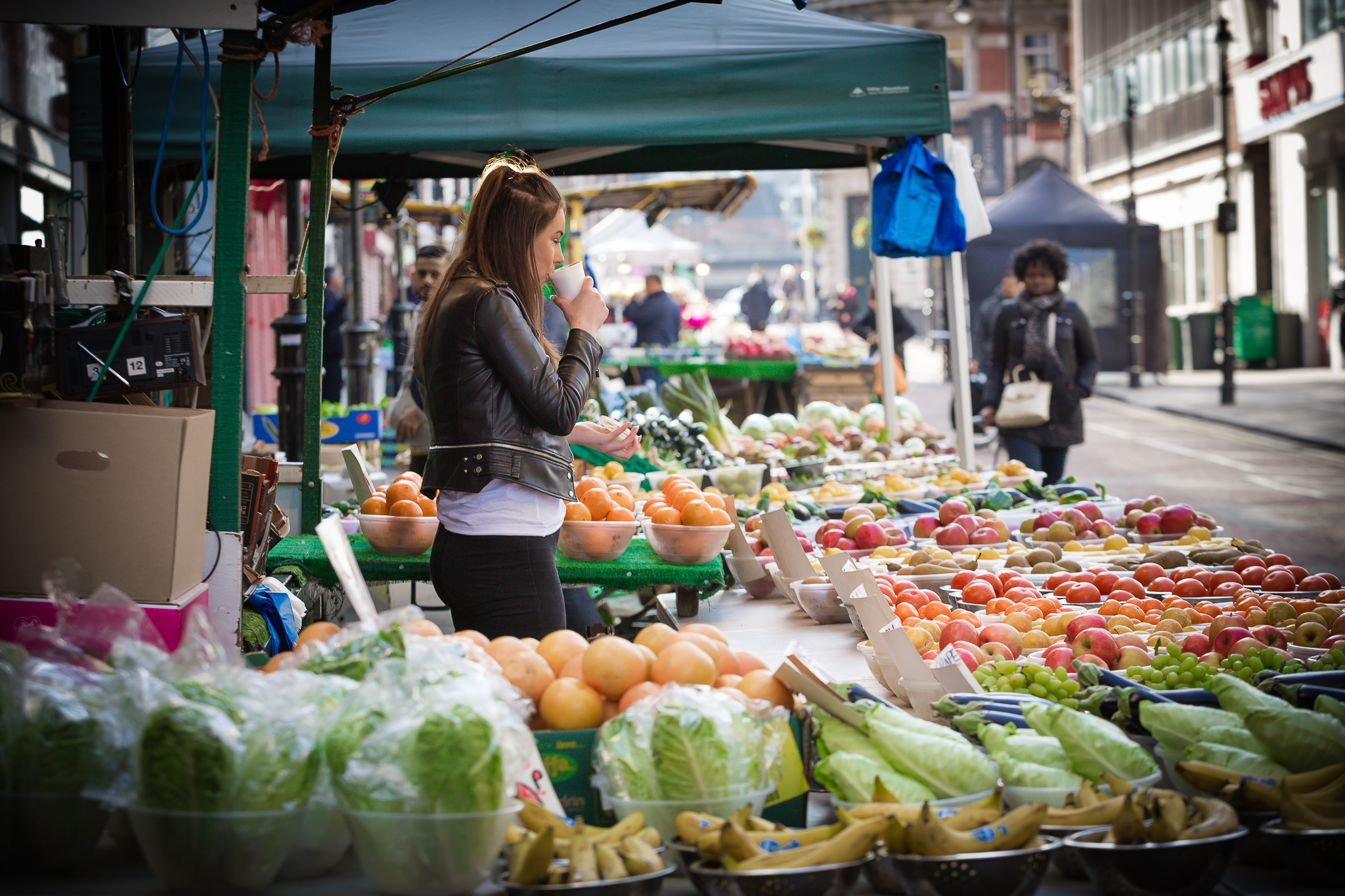
Many Croydon residents still appreciate the down-to-earth, good-value fresh produce available from Surrey Street stalls
Of course, the council’s mishandling of business in the town centre does not stop at the 700-year-old street market. Recently, the council has expanded its wrecking ball policies for business to staging dawn raids on the old Allders building, managing to shut down two dozen small traders, some permanently.
And all the while, they continue to stand by watching as North End rots because of the development blight caused by the stalled Westfield development.
Still, at least Newman and Watson have managed to preside over the arrival in Croydon town centre of the 10-quid burger and the £8 pint.
Trebles all-round!
- Become an Inside Croydon supporter today. For £5 per month enjoy access to exclusive content like the Under The Flyover podcasts, as well as money-saving special offers, while helping to support the borough’s only independent news outlet.
- Click here for more details

- Inside Croydon works together with the Bureau of Investigative Journalism and BBC London News
- Inside Croydon named Journalist of the Year at 2018 Anna Kennedy Online Autism Heroes Awards
- ROTTEN BOROUGH AWARDS: For two consecutive years, 2017 and 2018, Inside Croydon has been the source for two award-winning nominations in Private Eye magazine’s annual celebration of civic cock-ups
- In 2018, Inside Croydon had 1.6million pages viewed by more than half a million unique visitors
- If you have a news story about life in or around Croydon, or what to publicise your residents’ association or business, or if you have a local event to promote, please email us with full details at inside.croydon@btinternet.com
