

It’s tough down South.
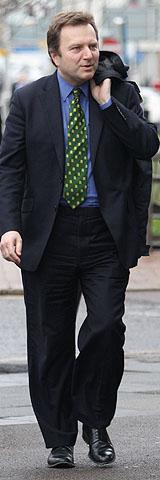
Croydon’s long-term decline is worse than Newcastle and Nottingham. No, that’s not Inside Croydon “talking down” the borough. That’s the shocking news that Croydon Central’s MP Gavin Barwell has had to break the Prime Minister.
In an extraordinary admittance of just how much things have fallen apart in the past six years or so, Barwell confides in a letter to “Call Me Dave” Cameron that Croydon suffers from a “long-term decline of our town, which in scale is larger than Newcastle or Nottingham”.
Barwell underlines Croydon’s decline by reporting that the “total annual spend in our retail centre has declined from £909 million in 2005 to £770 million in 2010.”
Croydon’s high street has become a place where not even bookmakers or charity shops can manage to turn a reliable profit, judging by some of the closing down signs and shutters to be seen around the town centre. Barwell’s claims are based on figures from the Office of National Statistics, which show that while Croydon’s retail spend has collapsed by 15.3 per cent, retail sales nationally are up 12.9 per cent over the same period.
And that’s all before the damaging impact on Croydon of the 8/8 riots. Shows you what a nonsense all those boasts from the Ministry of Truth – also known as the council press office – about improved footfall in Croydon were.
Barwell says that in Croydon, “the vacancy rate has increased from 5 per cent to 11 per cent” for retail shops.
On his website, Barwell crows that he has written to the PM about Croydon’s decline. Are we supposed to be grateful?
It’s good to realise that you are facing a crisis, but is penning (another) letter the solution?
It is not the same as getting hard and fast results. Results is the currency that previous Croydon politicians dealt in. Results like those secured by Jack Weatherill in the form of Croydon Business Venture during a recession, or £120 million for the Tramlink network, or getting a by-pass built are examples.

The Land Registry: they stayed in Croydon only after some serious lobbying work
In the last Parliament, plans to close the Land Registry office in Croydon were turned around by strong vocal complaints at Westminster, which not only rescued the office from closure but made it the national HQ for the government agency. Plans to downgrade Mayday Hospital were also successfully defeated. That all took more than the odd letter to No10, or a Saturday shuffle with a few young friends to pick up litter.
Barwell tries to protect himself from public scrutiny by using what might be described as the Lib-Dem gambit of neutralising criticism. For instance, of the Nestlé departure he said that “petty squabbling about who is to blame for this latest reverse isn’t going to achieve anything”.
Having good relations with your town’s major private sector employer might seem to be a vital role for local politicians. What a shame then, that the relationship broke down. Our sources suggest that not long before the international food giant announced it was to leave, there had been a stand-up shouting match between one of the company’s executives and one of the most senior figures from Taberner House.
After the announcement that the company was heading for Crawley, the bile that came out from the Conservative-run council about Nestlé’s UK boss in the briefing to the Sadvertiser‘s “Insider” column showed just how unpleasant the attitude of the council to Nestlé had become.
Barwell’s Conservative instincts do not run very deep, as he appeals for the free market to be overridden when he asked the government to buy up yet more property in Croydon, when it would have been better to let enterprise rip by taking up the Conservative London Mayor’s offer of an Enterprise Zone (EZ).
The EZ would have given key tax breaks to Croydon businesses on property taxes. More businesses in Croydon would mean more employees based in Croydon, many of whom would use Croydon’s shops, pubs, bars and restaurants.
The problem for Croydon is not with rent levels, which can be relatively modest, but with the crushingly high business rates which mean that the clearing level for renting out empty properties is often actually a minus figure below the rent level.
Sadly, a bit like the recalcitrant far-left councils in London’s East End who did not want to lose their planning powers to the London Docklands Development Corporation in the 1980s, Croydon’s Conservatives did not want to surrender some of their Town Hall planning powers under the terms of the EZ. These were planning powers that they had
already so palpably failed to use to Croydon’s advantage.
Small-minded people frankly, barring Croydon’s progress.
An EZ is urgently needed for Croydon, but it was not proposed by Barwell to the PM.
Barwell calls for better links to the M25 and M23, but he misses the irony that it was Ken Livingstone who pushed this forward by building the Coulsdon by-pass after a 70-year delay since it was first proposed. And that it was the Conservatives in the form of Richard Ottaway MP and the Conservative councillors from Purley in the last decade who blocked the road flow improvements at Purley Cross. To be fair, Conservative Lord Bowness, who stands head and shoulders above current municipal leaders, did try to cut this Gordian knot in the 1980s and early 1990s.
Nor does Barwell ask the PM for the tram to be extended to Sutton town centre or to Crystal Palace. Perhaps Barwell realises that that might be just too embarrassing for Cameron’s Bullingdon Club friend Boris Johnson just before a mayoral election. Johnson, having cancelled the Crystal Palace extension upon his election as London Mayor, then promised he would build it after all just about a year ago, only to discover more recently that after squandering millions on the Boris Bus and his central London bike scheme, he has left himself no cash in the TfL budget for such a vote-winner. Livingstone promises to find the money to build the link from central Croydon to Crystal Palace and Bromley.
Barwell does ask for government jobs to come to the town. This is a meritorious proposal, offering government departments cheaper costs than in central London, while still only a 40-minute journey to Whitehall. But Gavin has been “making a case” for this since making his maiden speech in June 2010, and so far, with 1,000 government jobs already gone from Croydon since Barwell became an MP, there is a lot of ground to make up.
Croydon the butt of jokes again
Croydon’s public sector employment stood at 29 per cent of total local jobs in 2010. Clearly Croydon was always going to suffer under a Conservative government seeking speedy cuts in spending in the context of its fiscal plans.
Croydon has once again been mocked on local radio this week for its (lack of) cultural offer and the enterprising Croydon Tours ridiculed for its £8 tours of historical Croydon which offers vistas from a multi-storey car park (which seems a very similar concept to an idea in a TV programme hosted by Sue Perkins, who clearly harbours few rose-tinted illusions about her home town). Perhaps the £660,000-plus a year council press office would better be used backing the work of Croydon Tours’ local entrepreneur rather than splashing out money on Decaux poster adverts for their political masters.
Croydon’s promotional image needs to focus on its green spaces and our pre-20th century heritage. Let’s give up on the dated, wannabe Manhattan skyline as a Croydon motif, which has no glamour in the 1960s buildings that would better grace an ex-Soviet Urals town, and has no future in the unsustainable residential tall towers now proposed.
In the town centre Barwell backs a secondary school for the General Hospital, site which seems an amazing flashpoint proposal. In his letter to the Prime Minister, Barwell also mentions the prospect of developing the Sussex University link for Croydon College. What is needed is a Council that stops abusing its planning powers to frustrate Croydon College’s plans for development and stops looking at the political advantages of keeping hundreds of students – the majority of whom would likely be non-Conservative voters – out of residential accommodation proposed by the college in central Croydon.

Nestle's HQ offices in Switzerland: a low-rise vision that Croydon Council failed to share with the company
Croydon’s ruling Conservatives truly fear that such young voters would likely swing the Fairfield ward against the Tories.
What’s lacking from Barwell’s letter or any council “masterplan” is a vision of a low-rise sustainable central Croydon.
That’s a sensible vision that sparked the rows with Nestlé, who wanted new, low-level headquarters offices. Clearly, Croydon councillors have not seen the attractive and well-manicured low-level Nestlé HQ in Vevey. Of course, Croydon cannot offer a view of Lake Geneva, but we certainly have enough derelict space in the town for an extensive six-storey office building in Vevey’s Palais Nestlé style.
In his letter to Downing Street, there was nothing from Barwell about the arts, or capitalising on the pull of the BRIT School, its international pop successes (a record six Grammys in one night this week, for instance, for former pupil Adele) and its ethnic
diversity. But the arts is a difficult area for Barwell, of course, with Croydon councillor Sara Bashford running his constituency office; Bashford is the very councillor who has single-handedly been responsible for divesting Croydon of its arts and culture.

Not only premature, but also somewhat gauche. Who could Barwell have had in mind when he said people had been "working behind the scenes"?
No vision and little prospects for Croydon, then, except perhaps for shopping mall developers Westfield and Hammerson, though their competition had better be sorted in the marketplace.
At the back end of last year, Barwell was rather gauche when he was quick to claim credit for the Whitgift Foundation signing an exclusive development deal with Westfield for the Whitgift Centre. Barwell sits on the Whitgift Foundation.
But the Foundation infuriated the other majority shareholders in the Whigift Centre, so
this competition between Westfield and Hammerson had better not be cursed by party political games played by the Foundation’s Tories, or indeed by the type of council interference which worked out so badly in the Arrowcroft and Croydon Council v Stanhope stultifying stalemate.
Better a new vision built around…
- marketing Croydon as a place of healthy green spaces and suburban living, easily reached from London
- improved public transport, including trams
- an enterprising low-tax Enterprise Zone Town Centre with independent shops drawn in by low property taxes and lower parking charges
- a pro-artisan and pro-arts cultural offer with a performing arts excellence built around the BRIT school
- support for an attractive street environment both for Surrey Street and for the myriad of ethnic minority food shops at West Croydon that could sell Croydon as a Camden Market-style “shop the world” experience. The post-riots funding ought to have gone to the areas which suffered the greatest trauma and damage on the night of the riots, to London Road and Surrey Street
- a determination to bring John Lewis to the centre of Croydon, with the prospect of attracting again more shoppers from the south of the borough
- a police service that puts more of its people, properly trained, out on to the streets in times of trouble thus improving people’s confidence to visit Croydon
- the vibrant voluntary sector needs to be allowed to breathe, with grant support, but left unsuffocated by council bureaucracy
- a serious investment in money to divert teenagers from gang crime, not the pitiful £350,000 that the MP boasts about
- a serious-minded vocational offer for our young people and the over-50s grown up from the grass-roots of local business and Croydon College with higher value manufacturing brought back to Purley Way and a science park, not houses, on Cane Hill
- a council that facilitates the spending of money locally with local businesses to boost Croydon’s economy
- more re-cycling; less burning of waste
- safe, green cycle routes
- a low-rise sustainably built Croydon town centre
- and an attention to district centres , especially to Crystal Palace,which could be south London’s Hampstead and especially to Coulsdon, which has not been allowed to make the best advantage of the by-pass.
See, it’s not difficult and it’s not expensive to have a joined up vision for Croydon, its promotion, its people, enterprise, environment and culture.
- Andrew Pelling is the former MP, London Assembly member and Croydon councillor
- Inside Croydon: brought to you from the heart of the borough, free of charge, an independent voice standing for freedom of speech for the people of Croydon
Related articles
- Croydon’s Conservatives shy away from Mayoral control (insidecroydon.com)
- Croydon in 2012: the Garbage Gallery (insidecroydon.com)
- 200,000 new jobs? Still nothing coming to Croydon (insidecroydon.com)
- Blurred vision leaves Croydon with empty concrete canyons (insidecroydon.com)