

We’ve had red Labour. There’s been “Blue Labour”. Now, a handful of councillors from the north of the borough want to see a truly “Green” Labour in Croydon.

A network of ‘green corridors’ are among the measures suggested in a call for ‘rapid action’ over the environment and inequalities
Learning from many of the environmental benefits of the coronavirus lockdown, and the many deadly lessons in inequalities around the borough which covid-19 highlighted, five Labour councillors have been joined by a dozen civic societies and organisations calling on the council to deliver on its six-year-old promises “to make Croydon London’s greenest borough”.
There’s more than a sense from the letter – which appeals for “rapid action” over inequalities and pollution issues – that the signatories suspect that council leader’s Tony Newman’s Croydon Climate Crisis Commission will amount to nothing more than another exercise in adding to the planet’s hot air emissions while providing another £100,000 or so on to the bottom line of David Evans’s The Campaign Company.
The letter is addressed to Newman and Miatta Fahnbulleh, the chief exec of the New Economics Foundation, ostensibly the politically neutral figure dragged in to chair the talking shop.
As well as the councillors, the letter is signed by the Croydon BME Forum, the Living Streets Group, Croydon Extinction Rebellion, Mums for Lungs, the Crystal Palace Transition Town group, Peddle My Wheels, the Thornton Heath Community Action Team (a pet project of Jamie Audsley, the Labour councillor behind the letter), the Asian Resource Centre, Croydon Cycling Campaign, and the covid-19 Mutual Aid organisation that has sprung up around the borough to such effect in the last three months.
The letter comes with what they call their “Plan for a Croydon Green Recovery”, which they say “sets out our recommendations for how people and planet can recover together and we can avoid returning to ‘business as usual’.”
The appeal for a “new normal” in the post-covid world says, “Croydon, along with the country and the wider world is at a crossroads.
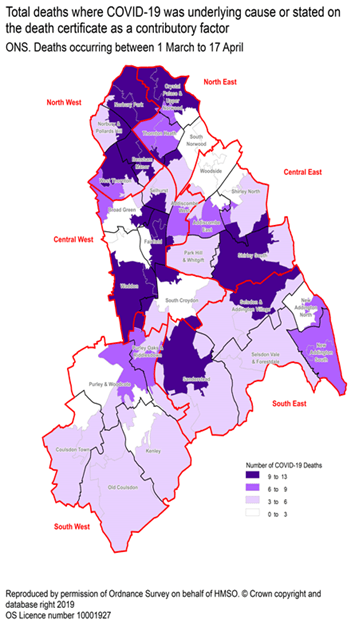
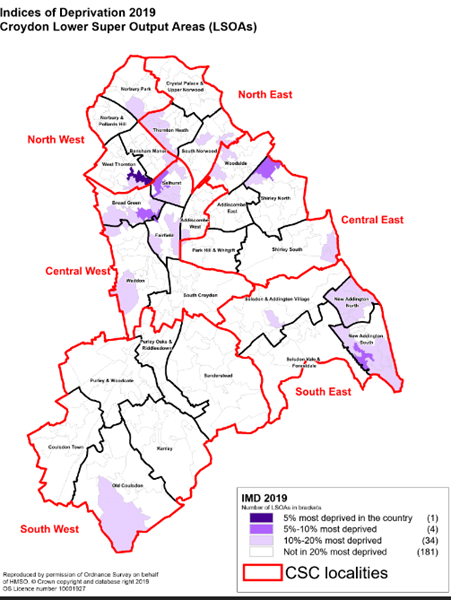
“Those living in crowded housing in the north of the borough have been both more likely to catch the disease and more likely to die from it, due to the inequalities of deprivation such as air pollution and poor health, whilst members of our BAME communities have been attacked with particular ferocity.
“The lock-down has been far more dangerous if your work is precarious, low paid or manual, or if you have limited or no access to outside space – in Croydon, too many have been in these situations.
“As a result you’ll know well it is now more important than ever that we take rapid action to create a more equitable society while also accelerating to transition to net-zero and biodiversity net gain.
“This crisis has laid bare the fundamental connection between healthy, flourishing and productive communities and a thriving environment. Restoring nature and robust environmental protection will help build resilience and reduce the risk of future global health and economic shocks.
A key part of the proposals is the creation of green corridors stretching from the town centre to all parts of the borough, beginning with London Road to Thornton Heath Pond.
Richard Mullins, an architect, has helped develop the plans. “The Green Corridor is a way of creating and improving access to green space in the north of the borough, fast. Through the creation of pocket parks, reallocation of kerbside space used by cars to green space, and the creation of protected cycle lanes and walking routes to connect existing green spaces, we can ensure that Croydon’s many green spaces – one of its key strengths as a borough – are better available to all our communities,” he said.
According to figures released by Public Health England, up to June 19 Croydon had the highest number of coronavirus cases in the whole of London, with 1,532.
London has been the worst affected region of the country, with 27,416 covid-19 cases record by the end of last week.
The Green Croydon letter emphases that those living in crowded housing in the north of the borough have been more likely both to catch the coronavirus and to die from it, due to worse air pollution and poor health. Members of black and ethnic minority communities have suffered particularly badly.

Muhammad Ali: walking and cycling supporter
“This crisis has laid bare the fundamental connection between healthy, flourishing and productive communities and a thriving environment,” Audsley said.
“Restoring nature and robust environmental protection will help build resilience and reduce the risk of future global health and economic shocks.”
Another councillor signatory, Broad Green ward’s Muhammed Ali, said, “Residents have realised the importance of access to green space for their health, of safe and pleasant walking routes, and perhaps even how cycling can reveal a host of new green spaces.
“Now we need to ensure everyone has access to quality green space.”
Their Green Recovery Plan for Croydon calls this “a once in a generation opportunity to shape a new world”, and Amy Foster, of the Croydon Living Streets organisation, warns, “All indicators are that traffic levels are set to rise to double what they were pre-lockdown in outer London boroughs like ours and this is why the Green Recovery Plan is vital right now.
“We know how important safe walking routes to our high streets are, to our green spaces and to walk and school. The Green Recovery Plan will help rebuild not only our economy but also our communities.

Less traffic on safer roads for cyclists and pedestrians is a cornerstone of the Green Recovery Plan
“Removing unnecessary motor traffic from our streets is about improving mental health and wellbeing, as we create calmer streets where socially distanced play and conversation is possible and healthy travel habits enabled.”
Foster’s fears for air quality in outer London are based on the expectations that the increased congestion charges in central London, and the extension of the ultra-low emissions zone as far as the South Circular, seem likely to push motor traffic into areas such as Croydon.
Among some of the Green Recovery Plan’s longer terms recommendations is a call to extend the ULEZ to the M25, therefore including the whole of south London, while developing a borough-wide controlled parking strategy, as a means of widening pavements and reducing driven trips (a step up from the on-the-hoof road closures and pavement widenings conducted in the past two months), and to finally deliver on decades-old promises to build tram network extensions to Sutton, Crystal Palace and Streatham.
It also represents a thorough kick-start to the council’s own Climate Crisis Commission, which although announced in July 2019 has so far had just one meeting.
Among those backing the Green Recovery Plan and advocating better, less-polluting public transport is Crystal Palace Transition Town’s Angus Hewlett.
“The long-term plan for an expanded tram network will further help reduce car-dependency – improving air quality, freeing up street space for additional green infrastructure, and offering greater independence to people who can’t or don’t drive,” Hewlett says.
And Gareth Redmond-King, of the Croydon Cycling Campaign, said, “Croydon is the borough with the highest number of potential cycling trips in London, but at present has one of the lowest proportions of people cycling regularly, with fewer than 1 per cent of trips made by bike.
“The problem is that its 1960s-designed road network is a hostile environment even for experienced cyclists, and many minor roads are plagued by rat-running and aggressive driving, with little regard to 20mph limits.
“The proposed strategy of building ‘green’ connections between densely populated suburban centres like Thornton Heath and Addiscombe with the shops, employment and educational opportunities of the town centre a couple of miles away is well-suited to both the immediate situation relating to covid-19 – and the air quality and inactivity crises which have exacerbated its impact – as well as the longer-term need to transition away from carbon-intensive private transport.”
- If you have a news story about life in or around Croydon, or want to publicise your residents’ association or business, or if you have a local event to promote, please email us with full details at inside.croydon@btinternet.com

- Inside Croydon works together with the Bureau of Investigative Journalism and BBC London News
- Inside Croydon named Journalist of the Year at 2018 Anna Kennedy Online Autism Heroes Awards
- ROTTEN BOROUGHS AWARDS: For three consecutive years, 2017, 2018 and 2019, Inside Croydon has been the source for award-winning nominations in Private Eye magazine’s annual celebration of civic cock-ups
- Inside Croydon had 1.6million pages viewed by 721,000 unique visitors in 2019
