

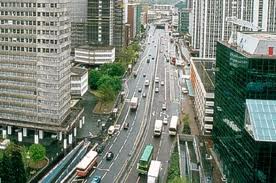
Is Croydon on the right road over city status?
A wise man once (nearly) said: “Those who cannot learn from history are doomed to repeat it.” The history of Croydon’s six previous failed attempts to secure city status ought to have been a lesson, though the latest glossy 56-page bid brochure produced by the council suggests that no one at Taberner House has learned very much at all.
The old County Borough of Croydon made three applications for city status, all of which were dismissed. The reason given each time was that Croydon was not sufficiently separate from London. When the then new London Borough of Croydon applied in 1965, the Assistant Under Secretary of State summarised the case against Croydon:
“…whatever its past history, it is now just part of the London conurbation and almost indistinguishable from many of the other Greater London boroughs”.
The same objections were made when Croydon unsuccessfully entered the Millennium competition for city status. Croydon was said to have “no particular identity of its own”. The most recent city status competition was held to mark the 2002 Golden Jubilee, again unsuccessfully.

Croydon Conservatives’ council leader Mike Fisher: has he learned nothing from the borough’s previous failed attempts to become a city?
History has a very clear lesson for Croydon on city status, but our politicians and Town Hall “public servants” seem either unwilling or unable to grasp some inescapable facts of geography and history.
Has anything really changed in the intervening years since 1965? Or is it not the case that, even more so, that Croydon is an integral part of one of the world’s great cities (some might say the greatest city)?
Perhaps the most fundamental question surrounding Croydon Council’s latest city status bid remains unanswered: exactly what benefits would there be for the people of Croydon, beyond massaging the egos of a few self-important politicians and public servants at the Town Hall?
Given that our politicians seem hell-bent on this seventh attempt, you might imagine that this time around, Croydon Council would do it properly, producing a bid document that would be a masterpiece of persuasion. But then, this is Croydon Council.
What they have produced is indeed a masterpiece – but of padding.
Anyone who lives in Croydon – whether they think the borough ought to have city status or no – would be entitled to feel a sense of squirm-making embarrassment that such a half-baked, half-arsed and half-completed document should ever have been put into the public domain in their name.
Of its 56 pages, the final 30 consists of blank space and some pictures, many of which had also been used in the early part of the document. It is as if someone got to page 26 and ran out of worthwhile things to write about Croydon.
Even those pages that are not there simply to “make up the numbers” and complete the brochure’s pagination are full of howlers, exaggerated claims and outright nonsense.

The Mayor of London gives his thumbs up to Croydon’s city bid. This need not necessarily be entirely A Good Thing
- On page 3 (when referencing pages, we will refer to the screen numbers of the pdf version of the brochure, available by clicking here), it quotes Bullingdon Boris linking Croydon with Paris’s outer ring of sink estates. These are the banlieues – notorious for their deep-seated social problems. So Mayor Johnson might have a point. But is this the sort of detail that Croydon’s advocates should bring to wider attention at the very start of such a document?
- Did no one proofread the pages for spelling errors (“temped”, instead of tempted, very unprofessional in the very first line of the Mayor of London’s offering)?
- The brochure (page 2) claims Croydon is “home to dozens of blue-chip multi-national companies” [our italics]. On page 15, it manages to list just 20. That is one dozen (singular) and a bit.
- “Croydon: the caring heart of the south east” is the title of page 7. This fails to mention the “caring” Croydon Council’s funding cuts of more than 60 per cent to local charities and voluntary groups.
- The same page prominently features a photograph of happy people enjoying the Croydon Mela. An annual multi-cultural music festival might be exactly the sort of thing an aspiring city would stage. In 2011, Croydon Council scrapped the Mela. So this sort of amounts to a false claim being made by the council.
- The document (page 4) highlights “Altitude 25’s landmark
residential tower”, which has been such a “success” that remains less than fully occupied, and “the imposing Iylo apartment block”, where building work has not progressed for almost a year after the latest developers went into administration. - Who briefed Croydon Mayor Graham Bass for his little offering on page 8? Has Bass or whoever it was responsible for drafting this message ever been to California? If they have, then they ought to have realised that equating Croydon with Oakland (San Francisco’s very troubled neighbour) is probably not a very smart move.
- Croydon Council’s normal reticence over its expensive Hub vanity project is set aside for the purpose of this document, and turned into a boast: “the council itself is helping to kickstart the construction boom, with a new civic office project linked with a range of building sites which are valued at £450 million”.
- “Annual spending statistics regularly put Croydon in the UK’s top 30 shopping destinations” (page 20). Actually, Croydon ranks 39th. Another false claim.
- “Some of Croydon’s most notable places still exist, while others have been replaced as time has moved on” (page 25). Who was responsible for penning this puerile nonsense?
- “The Croydon Summer Festival is a two-day extravaganza incorporating a world music day and an Asian Mela. It has been described as one of the best free festivals in Europe” (page 25). That will be the same acclaimed free festival which the council scrapped in 2011. Therefore another bogus claim.
- “There have also been national headlines where Croydon has played its part” (page 25). Were the document’s authors hoping that, six weeks after 8/8, anyone reading this will have conveniently forgotten the Croydon riots?
- Croydon’s part in the bungled theft of football’s World Cup trophy in 1966 is highlighted (page 25) as a “quirk”. For a wannabe city with something of an image problem, especially in respect of crime, is it wise to make light of the fact that Croydon has a long and ignoble history of handling stolen goods?
- Prominent on the same page is a striking photo of the Clocktower, with banners for the David Lean Cinema, the borough’s admired arts house movie theatre, and another example of the sort of cultural asset necessary that might help to elevate a “mere” borough to become a city. Croydon Council closed the David Lean Cinema in 2011. Yet another bogus claim, therefore.
- The Council’s list of 50 “famous” people associated with Croydon includes Darth Vader and Captain Sensible, supermodel Kate Moss, and Sir Philip Green, an entrepreneur notorious for tax avoidance. It’s a wonder they did not also mention the Croydon Facelift, multi-storey car parks and the local knocking shops, as promoted each week in the tawdry local newspaper.

Including references to half-completed tower blocks and empty residential blocks in the city bid brochure may prove to be counter-productive
But that’s where whoever it was responsible for drafting this document (possibly someone in the £660,000 per annum press and public relations department?) runs out of things to say about Croydon.
Our Council is remarkably coy on how much this city bid is costing us. It is rarely able to do even the simplest of things without calling in an army of expensive external consultants. Did they engage any costly PR firms to advise and draft the brochure, and if so, how much did they charge? How much did the design, typesetting, photography and print bills all amount to?
The city status judging panel when they visit the borough will have to be wined, dined and accommodated. How much will that cost the council tax-payers of the borough of Croydon?
SURELY, GIVEN MIKE FISHER AND GAVIN BARWELL’S keenness on the bid, city status must be of great potential value to the people of Croydon? The hard evidence suggests otherwise.
Sunderland, like Croydon, had a dire image. So Sunderland invested a huge amount of time, money and effort on their city bid. They were successful in 1992. After 19 years of being a city, has Sunderland been transformed?
The answer, it may not surprise you to read, is not really. Sunderland’s local economy has continued to decline, even with the presence of the Nissan car plant (since 1986), and its image is unaltered. In the “Crap towns” rankings in 2004, after 12 years of the “benefits” of being a city, Sunderland was reckoned to be the third most crap city in the UK.
There is one group who will surely benefit from city status for Croydon, though: the council’s top brass and its politicians. For a city, £248,000pa is insufficient for a CEO, surely? The weighty responsibility of running a city would probably also dictate that the £45,000 per year in “allowances” for leading elected councillors would probably get an increase.
But one thing about city status that does come cheap is that the actual decision to confer this accolade on a town or borough ultimately costs nothing. Unlike something really useful, like Enterprise Zone status or a serious regeneration investment which can cost pots of money– city status is free. With the London Mayoral elections looming, might some of those in the corridors of power be looking at city status as a cheap election “sop” to Croydon?
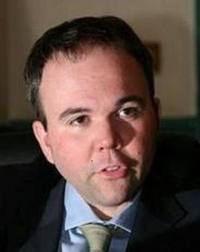
Gavin Barwell MP: spoke up for city status in Parliament, but has not detailed any real benefits
If that proves to be the case, it would give Fisher and Barwell something that they can claim to have “delivered” for the people of Croydon, though they are less likely to be as forthcoming when challenged to detail precisely what benefits might accrue.
For all the support in Parliament of MP Barwell ( “We also believe we are more than just a suburb of London”, Barwell told the House), Croydon’s city bid is fundamentally flawed. Croydon is and will remain an integral part of one of the greatest cities on earth. Surely, Croydon should be able to capitalise on being part of a great city, as opposed to trying to distance itself from it, as this council has done, for instance, over activities associated with next year’s Olympic Games?
The looting and arson of 8/8 exposed Croydon’s deep-rooted social problems. Our moribund local economy, dependent on the retail sector, provides too little employment opportunity. The relationship between many of our communities and the police is strained. Many of our public services are buckling under the cuts.
Although these problems are complex, they can be solved if they are addressed in an honest and forceful way. Expensive, unnecessary and, frankly, risible diversions such as Croydon Council’s laughable city bid do nothing even to begin to address those issues.
- Inside Croydon: brought to you free of charge, an independent voice standing for freedom of speech for the people of Croydon
Related articles
- Croydon’s crossover constituencies bad news for Brake (insidecroydon.com)
- Croydon 8/8: Council chief admits mistakes were made (insidecroydon.com)
- Costly council Question Times offer few answers (insidecroydon.com)
- Who decided Croydon should be an Olympics-free zone? (insidecroydon.com)