

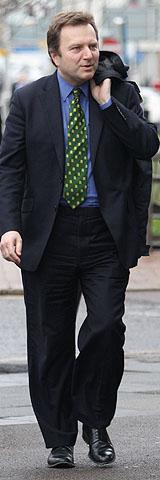
First, Nestlé announced its plans to quit. Now CIPFA, the Chartered Institute of Public Finance & Accountancy, has completed the task of moving staff to its London HQ, and away from the old NLA Tower. Who might be next to desert the concrete canyons of Croydon?
Nestlé and CIPFA are just the latest signs of the need to put together a practical menu of options to recover the town’s fortunes. Croydon Council is not providing that menu.
In announcing it was to leave its home of nearly half a century, Nestlé said of its new location – on an industrial estate under the flightpath of an international airport – that “it will provide a modern, efficient and attractive workplace for our people, in an ideal location”. It is a very significant criticism of Croydon Council that despite Nestlé giving Croydon five years’ grace to find them a suitable building, nothing happened.
Croydon once had civic leaders with the vision to commercialise the town centre in the 1960s, replete with subsidised arts and national quality concerts at Fairfield. The recent barbaric destruction of arts provision must have played some role in making Croydon less attractive as a national HQ for Nestlé – playing down to Croydon’s image as a cultural desert. Thank goodness the Warehouse Theatre goes on, despite occasional efforts in the last 25 years by the council to try to kill it.
Nowhere in Croydon, though, could “modern, efficient and attractive” offices be found for Nestlé – and that is an indictment.
Croydon Central’s MP, Gavin Barwell, has claimed that when he was on the council, he offered to use Council Tax-payers’ money to buy the outdated Nestlé Tower in an effort to keep the mutli-national’s UK HQ in the borough. Heaven knows how this was supposed to be a solution. All that would have led to is yet more misguided property speculation on the rates by Croydon’s Chief Executive, Jon Rouse, who fancies himself as a wheeler dealer. Sadly, he has been well and truly outsmarted by the City boys.
The vision these days is lacking. No that’s wrong. If anything, there has been a superfluity of glossy official “visions” for Croydon. There has been so much vision overload that local people don’t take them seriously any longer. There is only one outcome for Croydon: blurred visions.
These “visions” are all just the conglomeration of different developers’ plans. Developers are important, but they are here today and gone tomorrow, quickly moving on to the next big “project”, the next lucrative contract. As Simon Hall, Labour’s local re-development spokesman, has said, Croydon’s true partners are the businesses that are here to stay, and of course the local people who live, work and shop here.
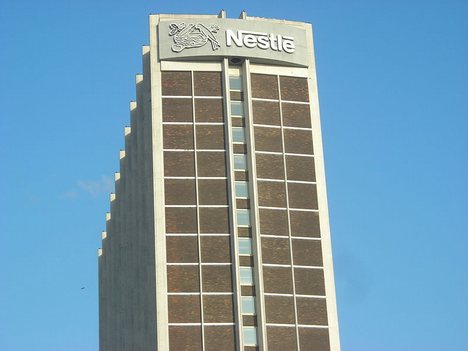
Is Croydon Council equipped to find any company capable of replacing Nestle?
It is these businesses that will drive the demand that ultimately helps to fill developers’ speculative builds. Build from the ground upwards on these safe foundations.
The Conservative-led government has already axed £65 million of funding for such work with business in Croydon. Another reason perhaps why Croydon lost out to a Crawley industrial estate for Nestlé’s future investment.
Another reason Croydon has lost out is because of an obsession of the council – both Labour and Conservative – with building an Arena next to East Croydon station, a project that did not stack up financially, and which prevented Stanhope, the blue-chip owner of the land, from getting on with developing that site with a prestige tenant.
It was an amazing feat for Croydon Council to miss the opportunity to redevelop the town centre during longest period of economic growth in our country’s history.
A John Lewis store might have been delivered for the town at the site next to Nestlé’s offices if the company had seen high quality Stanhope work underway. Stanhope built the spectacularly re-generative development at Broadgate.
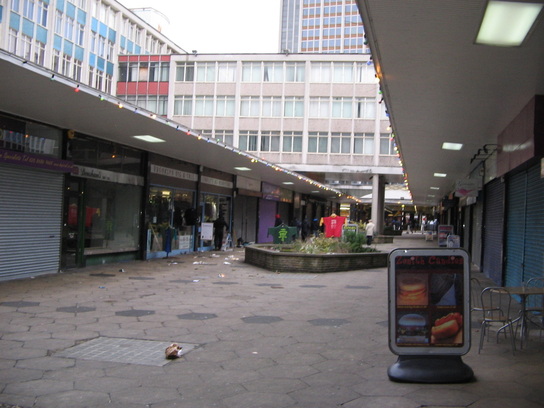
St George's Walk, victim of Croydon Council's planning paralysis
Certainly, redevelopment of the St George’s Walk site would have given Nestlé reason to remain. But Croydon only ended up losing loyal, much-loved and long-time partners of Croydon such as Turtles. And in its place, we now have… ? Meanwhile, Nestlé found themselves ensconced on top of a mainly empty shopping parade fit only for use in 1960s-period film pieces like Made in Dagenham.
Croydon politicians do speak positively about investments to come to the town in the future. But they have been doing that since “Croydon: The Future” – another of those “visions” – in the early 1990s. It spoke volumes for Croydon that the exhibition hall was blown away by the winds – a bad omen for the borough’s prospects.
While the Conservatives were delivering a new library and arts centre (now closed by nihilistic modern Tories, who have little in common with those earlier municipalist Conservatives), they realised that they had been complacent about Croydon’s business prospects. They were too late to find a new “vision” before their electoral demise in 1994.
Westfield dreams – or another planning nightmare?
It is little wonder that most ordinary people react with scepticism when local politicians, whether in the Town Hall or based at Westminster, start claiming the credit for the next big development to hit the town, when not a brick has been laid, nor a tile cemented on the site.
In the latest instance, not a drop of ink has been put to any building contracts, either, as yet again the people of Croydon have been asked to believe that a wave of money is about to reach the town.
Before Christmas, using social media, Barwell rather rashly took the credit for delivering a new investment in the Whitgift Centre from Westfield, the Australian shopping mall developers who opened their latest London centre next to the Olympic Park at Stratford last year.
In Croydon, the reality is that the Whitgift Foundation has irritated the hell out of its partners by entering into a secret, exclusive understanding with Westfield. It seems all too familiar, the same old corporate fight that plagued the East Croydon “Gateway” site. Once again, politicians have managed to set two corporate teams at loggerheads with each other, creating a stalemate that will slow, if not scupper, redevelopment.
Last time it was Arrowcroft v Stanhope. Now it is Westfield v Hammerson, NAMA
and Royal London.

Does Croydon need another part-completed or part-empty tower block?
The council will point to the massive tower blocks that have been given planning permission in the town centre and in Addiscombe as proof of impending prosperity. Only this week, the council rubber-stamped a plan for a second 55-storey tower, this time on Lansdowne Road. But will this ever be built, and even if it is, will anyone want to live in it?
Altitude 25, next to the Croydon Park Hotel close to East Croydon station, was supposed to be the first such impressive result of building a “landmark” tower to provide modern homes for high income young professionals. No one thought, when the planners had their “vision” for Altitude 25, that the “25” would stand for the occupancy percentage of the three-quarters empty building three years after it was completed.
Then there’s the Sarajevo look of the almost abandoned IYLO development at West Croydon which ought to be a warning. Started in 2007, this tower is still not finished, not because of any architectural shortcomings or difficulties, but because of the financial collapse of a series of owners.
Altitude 25 and IYLO, surely, demonstrate that whatever the developers and property speculators may claim when flattering Croydon’s planning committee, there is simply not the demand for these kind of “landmark” residential properties. Will the 55-storey “Mental” Tower at East Croydon ever be built to overshadow Addiscombe? Even Barwell – who spoke against this project – has expressed his doubts about whether the developers intend to progress their scheme, or simply to cash-in from selling on the site, with its valuable planning permission.
Nestlé were looking to move from their monument to the brutalism of the 1960s, and into an office building on a more human scale. Perhaps they also sought a council with a softer tone. The harsh, brusque and bruising manner of Croydon Council’s top management does not make for an attractive reason to stay in town.
There are other reasons to leave of course. The M25 acts as a magnet for businesses to migrate away from congested Croydon. That’s a long-term trend. The riots may well have been the last straw for some businesses. The police only putting out a maximum of 100 of its 700 officers for the riots cannot give confidence to employers in Croydon.
The release, under the 30-year government documents rules, of papers from 1981 that showed that Margaret Thatcher’s Cabinet seriously considered a recommendation to abandon Liverpool to a policy of “managed decline”, caused outrage and uproar.
Yet it seems that our 21st century politicians, at the Town Hall, at City Hall by Tower Bridge and at Westminster, are now actioning a process of “managed decline” for Croydon.
Croydon’s policy of divide and rule
Conservative councillors represent an electorate largely from the south of the borough, where many people prefer to shop to the south rather than in central Croydon.
Thus, we have a Conservative-controlled council whose main interest is not in
Croydon, but in keeping the south of Croydon free of overdevelopment. Hence the Quixotic desire to see housing needs met by impractical tower blocks in central Croydon, not in what they would describe as “backland development” or “garden grabbing”. You can’t blame them for that. They are representing the will of the people.
In many ways, perhaps this week’s launch of a Croydon Sadvertiser “South” edition is a reflection of how the two parts of the Borough of Croydon have grown so far apart that they are two very different towns.
The voters in Kenley, Purley and Coulsdon respect value for money. But it is not clear whether the Conservative Council can really claim that they deliver “VFM”. It is an obscene act of hubris that sees Croydon Council building themselves a luxury headquarters as part of a £450 million development scheme while the economy of the town falls apart around them.
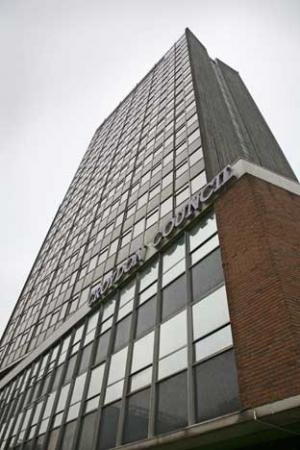
Taberner House: part of the trade-off in Croydon's £450m gamble with public assets
The loss of 1,000 jobs at Nestlé’s Croydon HQ is both an horrendous blow for Croydon and the proof that building a new Town Hall is not the regenerative catalyst for Croydon as the council has tried to claim.
It is a further scandal that the council, our council, refuses to be transparent about the details of its property speculation on the rates which it has embarked upon with a City private equity company, risking millions of pounds of Council Tax-payers’ money.
Rouse, the council’s Chief Executive, has overreached himself in thinking that he can make a profit out of property dealing in a failing economy. The Croydon Council Tax money spent providing soft loans to the council’s commercial partner would be better spent on supporting local Croydon businesses. But for many local businesses, it may already be too late.
There are many ways to reverse Croydon’s decline. Some of these would include:
- the council swallowing its pride and going back on its decision to turn down the opportunity for Croydon to become an Enterprise Zone with lower business rates;
- promoting the expansion of Gatwick in an effort to boost jobs there for the people of Croydon;
- the Tram being built to Crystal Palace as Ken Livingstone proposed (and proposes), but which Boris Johnson promptly scrapped when he took over at City Hall;
- reducing parking fees to bring in visitors;
- investing in Croydon’s green spaces so that this lifestyle selling point for Croydon would be a real one;
- and Barwell actually delivering on his promise to reverse the cuts in public sector jobs in Croydon by doing more than just having a meeting with Francis Maude.
There is one further strategy which might help revive central Croydon and revise the broader public perception of Croydon, but when Croydon College applied for planning permission for a residential block for students – on a much more modest, more human scale that the Mental Tower – this was rejected by the Conservative-controlled council.
Now, the council still has the opportunity to make Croydon College a residential university, with student flats in the empty Nestlé Building, with the effect of turning central Croydon into a youthful, vibrant part of the borough.
It would also bring into central Croydon up to a thousand new voters, few of whom, however, would be well disposed toward voting Conservative, thus changing the make-up of that already marginal parliamentary constituency and several nearby wards completely.
And that, of course, was never a consideration at all when the council previously decided to turn down Croydon College’s planning application.
- Inside Croydon: brought to you from the heart of the borough, free of charge, an independent voice standing for freedom of speech for the people of Croydon
Related articles
- Nestle confirms move to “ideal location” (ie. not Croydon) (insidecroydon.com)
- Croydon’s a bit rubbish and it’s getting worse (insidecroydon.com)
- The Nestle move: the £248,000 per year CEO speaks (insidecroydon.com)