

CROYDON IN CRISIS: Our political editor, WALTER CRONXITE, reports on the publication of a 24-page document which is an admission of six years of failure, and which comes ahead of ‘the most difficult few months the council has seen’

That proposal is contained within the Labour-run council’s emergency budget measures which were published (belatedly) last night, in what amounts to a 24-page admission of the failure of council leader Tony Newman’s six-year administration, as the casino financing of public services through property speculation has had its flaws brutally exposed.
The emergency budget goes before a cabinet meeting on Monday night, acting as a begging letter to central government to be allowed to borrow more money to tie Croydon over the immediate cashflow crisis caused by covid-19.
According to the budget report, the council’s latest forecast overspend in its revenue budget as a consequence of additional coronavirus commitments is £50.3million.
To win round the Tory government and sceptical civil servants at the Ministry of Housing, Communities and Local Government, it seems that the council is expected to demonstrate a willingness to chuck overboard from its sinking ship some key parts of the policies advocated by Newman and his finance chief, Simon Hall, including Brick by Brick.
In an email on Thursday, Katherine Kerswell, the council’s interim chief executive, explained to staff, “If we get government’s backing it will give us the time and space we need to make fundamental changes to reset our organisation in order to deliver a balanced budget.

Katherine Kerswell: tough times ahead
“I want to be upfront with you that this will be an incredibly challenging time for everyone, perhaps the most difficult few months the council has seen.”
With the 15 per cent cuts recommended in this report, providing savings of £27.9million this year and another £22.4million to come, the hope is that this will be enough to satisfy Whitehall. A previous approach for a bail-out was rejected when Croydon’s in-year overspend was £35million.
There is little by way of surprises in the document.
Indeed, there’s not a lot in the emergency budget that could not have been brought forward as soon as July, which even then was already two months after the financial impact of coronavirus had been felt. But this being a Croydon “emergency”, their “urgent” action has taken a little while longer.
The council’s strategy depends on patience and understanding from Whitehall mandarins to allow them to ease away the overspend over the course of three years, rather than having to make good the shortfall by next March. The council is seeking a special dispensation “to seek a capitalisation direction to enable the 2020-2021 budget to be balanced” – a sort of civic version of robbing Peter to pay (broke) Paul.
There will be Council Tax rises to the maximum allowed – around 4 per cent – next April and in April 2022 (inconveniently for Newman and his cabal, just before the local elections). Car parking fees and permits will get a sharp hike in January. That ecologically friendly, anti-fly-tipping free service to remove bulky items? Gone.

Where’s the money gone? A table on the council’s overspend in the report to Monday’s cabinet meeting
The emergency budget report makes it clear that the council is broke, and but for covid-19, a Section 114 notice to that effect will have had to have been issued months ago – something Newman, Hall and their now discredited chief executive Jo Negrini repeatedly tried to deny was the case.
As the report states, “Croydon Council is currently facing a significant in-year overspend of £22.4million and does not have the necessary resources to cover it. In accordance with the Local Government Act 1988, the Council is required to ‘manage its budget within the approved estimates’. This means that it cannot spend more than it has available to fund those costs, and if it appears that expenditure in the year is going to exceed available resources, then action needs to be taken immediately to ensure spend is reduced and the budget is balanced and therefore remains lawful.”
The slow delivery of cuts and implementing financial recovery is illustrated in the admission that the council’s own estimates of its overspend has risen by £1.3million while Newman and Hall have dithered and denied over the past 10 weeks. Of course, it is possible that £0.44million of that extra overspend is from the cash they threw at Negrini as she left her job last month.
The council puts the net impact of covid-19 on the council’s spending at £42million. Croydon expects to receive £28.5million in grants from the government for covid-19 costs – well below the promise of “whatever it takes” which was made by Boris Johnson and his ministers back in March and April.
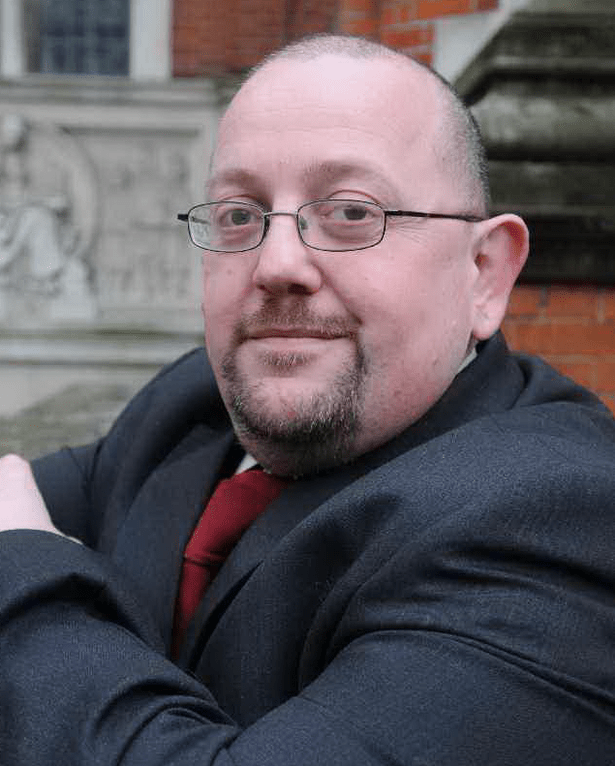
Criticised: Simon Hall
Croydon’s overspend also includes £3.3million on unaccompanied young asylum seekers who arrive in the borough to visit the Home Office at Lunar House, an expense which is reasonably argued ought to be a cost to the national government.
The matter of Croydon’s low level of reserves – the Town Hall’s savings for a rainy day – is also addressed. CIPFA, the local government finance officers’ association, and the council’s own auditors had warned before the covid lockdown that the council’s finances lacked “resilience”. Now, somewhat late in the day, even the council admits that this was the case.
For a council report, the emergency budget is overtly critical of cabinet finance chief Hall. This is especially unusual because Hall’s name is at the top of the paper as one of the people responsible for it.
“With general fund reserves of only £10.2million, Croydon does not have the financial resilience to resolve this situation… The 2020-2021 budget made a provision to contribute £5million to reserves this year. This was a contribution to reserves for the first time in over six years. This recognised that reserves were too low for a council the size of Croydon.” We’ve added the italics for emphasis: Hall has been the cabinet member for finance since 2014.
Of the recommended cuts, the largest single part, £12.1million, is to be stripped from the council’s health funding budget – with Matthew Kershaw, the CEO of the Croydon NHS Trust involved in the finance review process, significant chunks of covid-related funding have been placed in the mix.
There’s £2million of savings from the 15 per cent in job cuts – many of which will be seen particularly bitterly now that it is known that £440,000 has been spent on a pay-out to the previous chief executive.
And there’s more job cuts to come. Many more.
As the report states, “There is a much larger saving in next year which is estimated to be in excess of £15million and once the final redundancy notices have been served and the notice period for staff leaving the organisation has completed, it will be possible to fully verify this figure.”
The council is also looking to claw back £2million through renegotiating with contractors. “Negotiations have taken place with providers and a number of contracts have been identified where savings can be generated this year. These are mainly as a result of the covid-19 pandemic and total £2million.
“The greatest saving in this financial year is associated with the passenger transport service.

No part of the council’s services escape the cuts, with health funding and children’s services hard-hit
It is towards the end of the report that Hall gets another critical assessment, this time over his misguided attempts to play at property speculation using millions of public money.
The “investment” of £30million in the Croydon Park Hotel went tits up in June when the council’s tenants went bust, blaming their landlords. And the £54million spent on buying the Colonnades is hardly looking like a shrewd move with a second coronavirus lockdown apparently coming our way.
Under Hall’s plan, the council is paying £26million a year in interest on its borrowings – which washed its face until covid came along. Now, there’s little or nothing to show for it. A review (another one) of this policy is recommended, and a fire sale of council-owned properties cannot be ruled out.
“Part of the work to reduce costs and ensure long term financial sustainability must include a review of the current capital programme and asset investment strategy in this year and in total,” the report says.
“At this moment it is essential that a full review of the capital programme is undertaken with a view to reduce borrowing and its associated costs. Borrowing costs currently account for £26milion of our annual spend. All future and current capital projects must be reviewed to ensure these annual borrowing costs are kept as low as possible and don’t put extra financial pressure on the revenue budget.” Again, our italics.
“Cabinet are asked to agree to a review of the total planned capital programme and seek to reduce and delay projects to reduce borrowing costs where possible, and will be brought back to cabinet and full council.” Anyone wanna buy an empty hotel, going cheap?

Admission of failure: this review could mark the beginning of the end for Brick by Brick
Similarly, what was Negrini’s brainchild, Brick by Brick, is about to be be given a very careful look, too.
The recipient of £260million in loans from the council, plus receiving a secret subsidy as dozens of properties were bought from the council at well below the market rate, Brick by Brick’s schemes have been plagued by delays and poor management and have so far failed to deliver the promised returns, either through sales on the private market or in terms of flats for the homeless.
Colm Lacey, a long-term colleague of Negrini, has been empire-building with public money at Brick by Brick, where the recent spin has been that the company is somehow “independent” of the council, when in fact it is wholly owned by the council.
So while Lacey’s two dozen staff might be immune from the council’s job cuts, with Negrini no longer around to protect her favourite the possibility of the council cutting its losses and selling off the loss-making company cannot be ruled out. With a more professional and capable development company in charge, it might even prove to be a quicker, and much more cost-effective way of delivering housing in the borough.
Croydon’s “Growth Zone”, which stalled when Westfield pulled the plug on its town centre development, and Hall’s RIF, the Revolving Investment Fund, will also get the once-over.
Section 9 of the emergency budget report comes under the heading, “Strategic Review of Group Companies and Entities”.
It states, “A review of all companies that are in the Croydon group and their relationship with the council needs to be understood to ensure they remain fit for purpose and that the risk profile they present for the council is fully understood and acceptable both individually and in total. Group Companies and entities include Brick by Brick Croydon Limited and Croydon Affordable Homes LLP, The Growth Zone and The Revolving Investment Fund and Taberner House.”
Don’t expect Croydon’s opposition Conservatives to vote against the emergency budget come Monday evening. But don’t expect their calls for the resignations of Newman and Hall to go away, either.
- If you have a news story about life in or around Croydon, or want to publicise your residents’ association or business, or if you have a local event to promote, please email us with full details at inside.croydon@btinternet.com

- Inside Croydon works together with the Bureau of Investigative Journalism and BBC London News
- Inside Croydon named Journalist of the Year at 2018 Anna Kennedy Online Autism Heroes Awards
- ROTTEN BOROUGH AWARDS: For three consecutive years, 2017, 2018 and 2019, Inside Croydon has been the source for award-winning nominations in Private Eye magazine’s annual celebration of civic cock-ups
- Inside Croydon had 1.6million pages viewed by 721,000 unique visitors in 2019
