Croydon bird-watchers have installed a plaque to commemorate the life and far-reaching works of Eliza Phillips, one of the founders and most generous benefactors of what we know today as the Royal Society for the Protection of Birds.

Pride of place: unable to instal a blue plaque in her memory, Eliza Philliops now has an information board close to the site of her former home on Morland Road
Phillips’ home from 1890 until her death, aged 93, in 1916 was Vaughan House, on Morland Road, Addiscombe.
After being widowed for a second time, in 1885, Phillips made it her life’s mission to protect animals and bird life in Britain. The plumage trade and use of feathers in Victorian ladies’ hats was having a devastating effect on some of Britain’s native breeds of bird.
The Society for the Protection of Birds was formed by the 1891 amalgamation of The Plumage League, an anti-plumage group run by Emily Williamson, and the “Fin, Fur and Feather Folk” whose afternoon meetings were established in 1889 at Phillips’ and other supporters’ homes, including at Addiscombe.
Phillips became head of publications of the new organisation. The Society published its first leaflet, Destruction of Ornamental-Plumaged Birds, aimed at saving the egret population by informing wealthy women of the environmental damage wrought by the use of feathers in fashion. A later 1897 publication, Bird Food in Winter, aimed to address the use of berries as winter decoration and encouraged the use of synthetic berries to preserve the birds food source.
By 1898, the SPB had 20,000 members and by 1897 had distributed more than 16,000 letters and 50,000 leaflets. The Society received its Royal Charter in 1904.
Phillips died on August 18, 1916, at her home at 11 Morland Road, leaving a will which helped transform the fortunes of the Society she had helped to establish. She left an estate of more than £100,000 – £8.56million at today’s values – half of which was distributed among 70 named family and friends, while the other half was designated “for the protection of and relief of suffering of beasts and birds”.

Free flight: Phillips’ work helped reduce the trade in bird feathers, such as the little egret, which were caught or shot for their plumage
Phillips left her home, Vaughan House, to the church for use as a vicarage for the the minister of St Martin’s Church.
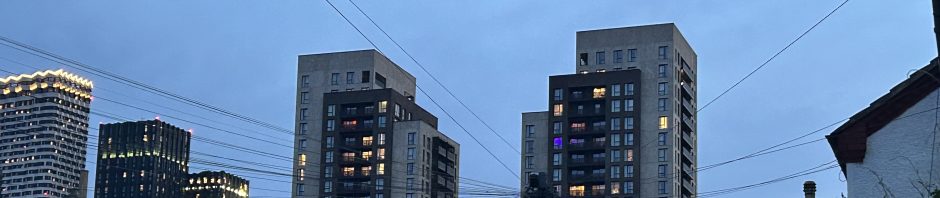
The house was demolished in 1967 and replaced by four tower blocks, only one of which remains on Gordon Crescent. Phillips also made provision in her will to build a clock tower for St Martin’s Church, on the corner of Stretton Road. The clock tower was completed in 1922, but it and the church were demolished in 1995.
By 2012, the RSPB which Eliza Phillips had helped to establish, had more than 1million members, including 18,000 volunteers assisting on 200 nature reserves covering 320,000 acres, and home to 80% of the country’s rarest or most threatened bird species.
Yet there is no known picture of Phillips, and none of her former residences – or clock towers – remain.
This has left the Croydon branch of the RSPB with a bit of a conundrum, as they have sought a way of marking Eliza Phillips’ important contribution to conservation.
Because nothing remains of Vaughan House or St Martin’s Church, it is not possible to get a formal blue plaque in her memory.

Well-informed: the plaque to Eliza Phillips, RSPB co-founder, on Morland Road
However, John Birkett and Croydon RSPB, with the agreement of the council, has been given permission to use an information panel next to a children’s playground which sits adjacent to the site of Vaughan House.
“I installed the plaque earlier this week and I intend to have a low-key unveiling ceremony there next Thursday, March 13 at 11am,” Birkett told Inside Croydon.
“If you are in the area, or wish to come along, please do pop by. It has been long overdue that we had something in Croydon to commemorate our connection to the founding of the RSPB.”
Croydon RSPB is stretching its wings a little in the spring sunshine, with its monthly talk on Monday, March 10, when Valerie Vile will speak about Dungeness – a regular destination for the birding group’s field trips.
In her talk, Valerie Vile will showcase the work that goes on at Dungeness to make it such a haven for birds, in context of the geology, ecology and range of wildlife. The talk will be held in the hall at Croham Road Baptist Church, South Croydon, beginning at 7.30pm.
Tea and coffee will be available during the interval, though the organisers do ask that “try to bring a suitable drinking vessel with you as we operate a bring-your-own-cup policy”. Saves on the washing up…
And coming up in May is the Big Croydon Bird Watch, “when we ask people to spend part or all of a day of their choosing watching the birds in Croydon and tell us what they see”.
This can range from just an hour looking at what is in your garden all the way to going round visiting as many sites as possible during the day.
The record for the number of species recorded in Croydon on a single day is 69.
- More information about all of these events, and Croydon RSPB’s other activities, can be found on their website by clicking here.
A D V E R T I S E M E N T


FREE ADS: Paid-up subscribers to Inside Croydon qualify for a free ad for their business, residents’ association or community group, just one of the benefits of being part of our online community. For more information about being an iC subscriber, click here for our Patreon page
PAID ADS: To advertise your services or products to our 10,000 weekday visitors to the site, as featured on Google News Showcase, email us inside.croydon@btinternet.com for our unbeatable ad rates

- If you have a news story about life in or around Croydon, or want to publicise your residents’ association or business, or if you have a local event to promote, please email us with full details at inside.croydon@btinternet.com
 As featured on Google News Showcase
- Our comments section on every report provides all readers with an immediate “right of reply” on all our content. Our comments policy can be read by clicking here
 Inside Croydon is a member of the Independent Community News Network


I have a few Croydon street directories at the moment, and can confirm (from the 1892 directory) that Vaughan House was No11 Morland when she moved there in 1890.
But it was on the Gordon Crescent side of Morland Road, which is now the even-numbered side.
At some point between 1892 and 1901, Morland Road was re-numbered and Vaughan House (the 11th house on the east-side of the road) was renumbered as No22 (the renumbering was not always that neat !).
So she lived at No22 Morland Road in 1901 and 1907, and presumably died there in 1916. Her second husband must have been named Edward, because she is listed as Mrs Edward Phillips in both the 1892 and 1907 directories.
My, Jim, what do you do for excitement, eh?
Eliza was married to the Reverend Edward Phillips, her second husband, and they lived at Culverdon Castle, Culverdon Down, Tunbridge Wells. Rev Phillips died in 1885.