
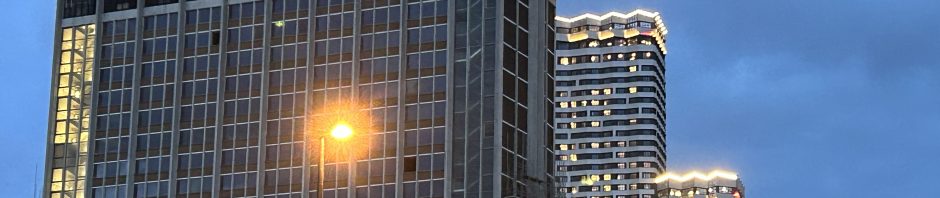
On a clear day, you can see the pollution: the Sussex cattle at Roundshaw struggle on this week, four days after last Sunday’s snowfall. The Croydon skyline, from blue to dirty smoggy brown, visibly demonstrates the toxic air hanging over the town
NATURE NOTES: A year-long photo-diary of an area of exceptionally important wildlife habitat on our doorsteps is coming to a close, with nature so far resilient against the impact of the global climate crisis. But for how long? By STEVEN DOWNES

Back where we started: this single tree, close to the start of my walks, offers a constantly changing indicator of the seasons on the Downs
It was four days since the modest snowfall we’d had last Sunday, and the conditions underfoot at Roundshaw were, let’s say, crunchy. The first significant snowfall we’ve had hereabouts for a couple of years had stuck around, thanks to some below-zero temperatures during the daytime as well as at night.
The Sussex cattle, brought in each year to chomp down on the pasture in the paddocks to create the optimal environment for skylarks and small blue butterflies, were making the best of a bad job. With their brown, woolly coats, from a distance, if you screw up your eyes, you can half-imagine that they are American bison on the plains.
They’d been transferred into the second, smaller of the paddocks a week or so earlier. Not so much to offer them fresh grazing – the mild autumn had seen the grass growing well into November – but more to offer them the protection from the worst of the winter weather in the little spinney in the south-western corner, a natural corral that shields them from the wind as it blows in from over the Purley Way.
When I started this log of a year on Roundshaw Downs back in January, it had been as bleak as it gets. The spectrum of colours, from bright blue to smoggy brown, was a clear indicator then of the man-made, car-generated air pollution sitting over our town, slowly poisoning the lungs of its inhabitants. Continue reading →
Like this:
Like Loading...

 Flowers’ report is the first for three years that has not been dominated by covid and its demands on our public health services.
 Inside Croydon published a news story on November 30 which reported a council FoI response to a question about when Croydon would begin to utilise its libraries and other public buildings as warming shelters during the cost of living crisis. “We have no such plans at present,” the council stated, somewhat coldly.
 Bromley Council is due to hand the keys to Crystal Palace Park over to a charitable trust in April 2023, and the Crystal Palace Park Trust has released its strategy document ahead of the momentous event.

 The council’s glacially slow progress at pursuing any cases of wrong-doing that may have led to its bankruptcy in 2020 has been reported by the local government trade press this week, following Inside Croydon’s exclusives since October on the Penn Report and the dodgy £437,973 pay-off to former chief exec Jo “Negreedy” Negrini.

 With a dire shortage of homes available for rent from councils and social landlords, private renters have started to offer up to a year’s rent in advance to try to secure their tenancy, it has been reported.
 Rising interest rates are seeing house sales fall through and the price of homes across the country falling, according to figures from Britain’s biggest building society.


 Now, as a healthy, happy teenager, she has put that experience behind her and has her sights set on a future in music.


